Your Smile, Your Savings: A Complete Guide to Using Your HSA for Dental Care
If you have a Health Savings Account (HSA), you already know it’s a powerful financial tool. With its “triple tax advantage” (tax-deductible contributions, tax-free growth, and tax-free withdrawals for qualified expenses), it’s one of the best ways to save for healthcare costs.
But many people are unclear on what “qualified expenses” truly means, especially when it comes to dentistry. You might be wondering:
-
Can I use my HSA for a dental cleaning?
-
What about a more complex procedure like an implant or a crown?
-
Does Invisalign count?
As your partners in health, we want to demystify this process. Your oral health is a cornerstone of your overall well-being, and your HSA is designed to help you maintain it. Using these pre-tax dollars for dental care is not just allowed—it’s one of the smartest ways to use your account.
Here’s a comprehensive guide to maximizing your HSA for your dental needs.
The Ground Rules: Medical Necessity vs. Cosmetics
The IRS has one primary rule for HSA-qualified expenses: they must be for the diagnosis, cure, mitigation, treatment, or prevention of disease.
This means that any procedure, treatment, or product that maintains your oral health, prevents decay, or treats a specific dental problem is almost always eligible.
The only real exclusion is purely cosmetic procedures. Treatments that only improve appearance but do not treat a health issue (like professional teeth whitening) are not eligible.
The great news? Most of what we do in dentistry is fundamentally about your health, making it a perfect use for your HSA funds.
The Ultimate Benefit: You Can Pay for Your Family, Too
This is one of the most valuable and overlooked perks of an HSA. You can use the funds in your account to pay for qualified dental expenses for:
-
Yourself
-
Your spouse
-
Your eligible dependents (like your children)
They don’t even need to be covered by your specific high-deductible health plan (HDHP). As long as you have the HSA, you can use it to pay for their qualified dental bills, helping your entire family stay healthy while you save.
What’s Covered? A Breakdown of HSA-Eligible Dental Care
Let’s walk through the services you can pay for using your HSA, from routine checkups to major restorations.
1. Preventive & Diagnostic Care (The Foundation)
This is the best place to start. Using your HSA for preventive care helps you stop problems before they become larger and more expensive.
-
Healthy Mouth Cleanings: Regular cleanings (prophylaxis) are the #1 way to prevent gum disease and cavities. This is a classic, 100% eligible preventive expense.
-
Exams and X-rays: You can’t treat what you can’t see. Your exams and all diagnostic X-rays are crucial for detecting decay, bone loss, or other issues. They are fully covered.
2. Treatment for Gum Disease (Periodontal Health)
Gum disease is a medical condition that can affect your entire body. Treating it is a clear-cut medical necessity.
-
Periodontal Treatment: This includes non-surgical treatments like “deep cleanings” (scaling and root planing) to remove tartar and bacteria below the gumline.
-
Arestin: This is a great example of a specific, eligible product. Arestin is an antibiotic we place directly into infected gum “pockets” to fight the bacteria that cause periodontal disease. Since it’s a prescription treatment for a diagnosed condition, it’s HSA-eligible.
3. Restorative & Major Dental Work
This category includes all procedures designed to repair a damaged tooth, remove disease, or restore the function of your bite.
-
Extractions: The removal of a damaged, infected, or problematic tooth (like wisdom teeth) is a common and necessary medical procedure.
-
Root Canals: This treatment saves a natural tooth that has become deeply infected. It removes the infection and preserves the tooth, making it a vital and eligible expense.
-
Crowns, Bridges, Dentures/Partials: This is a common point of confusion. Are they cosmetic? The answer is no. These restorations “restore” the function of your mouth. A crown protects a weak or broken tooth, a bridge fills a gap to allow for proper chewing, and dentures restore your ability to eat and speak. All are eligible.
-
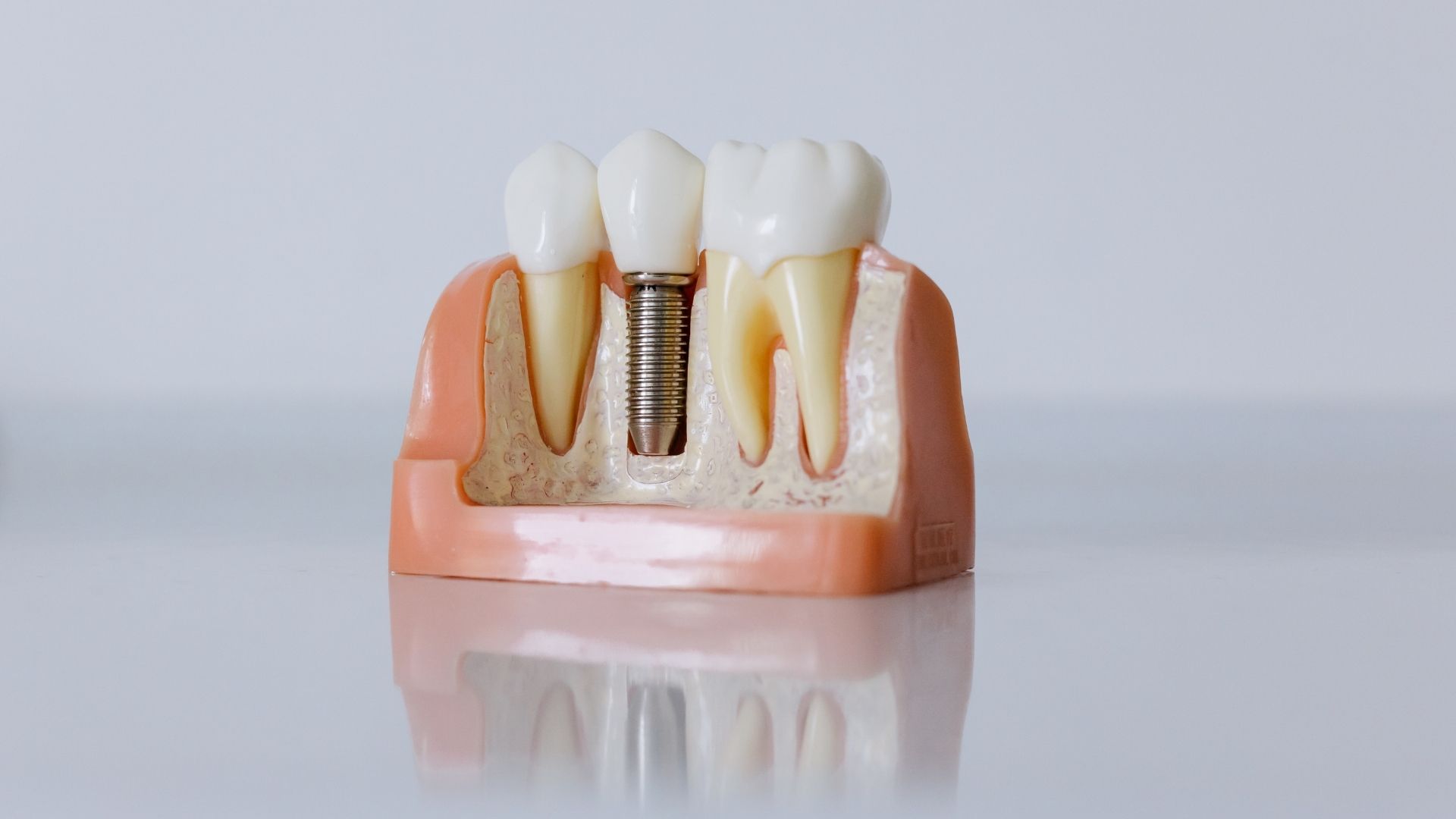
Implants: A dental implant is the modern standard for replacing a missing tooth. It is a surgical procedure that restores function and prevents bone loss, making it a qualified medical expense.
-
Sedation: Patient comfort is our priority. If you require sedation (like nitrous oxide or oral sedation) to comfortably and safely undergo a necessary procedure, the cost of the sedation is also HSA-eligible as part of that treatment.
4. Orthodontics (Straightening for Health)
-
Invisalign Treatment: This is another item that people often mistake for a cosmetic-only treatment. The reality is that misaligned teeth (malocclusion) can lead to a host of medical issues, including jaw pain (TMD), gum disease (it’s harder to clean), and excessive wear on your teeth. Because Invisalign corrects these medical issues, it qualifies as an HSA expense.
5. HSA-Eligible Dental Products
You can even use your HSA for certain at-home products, but there are rules.
-
Prescription-Strength Products: This is the easiest category. Products prescribed by your dentist to treat a condition are eligible. The best example is Prevident, a fluoride-RX toothpaste we recommend for patients with high cavity risk or sensitivity.
-
Electric Toothbrushes & Water Piks (Water Flossers): This is a gray area that requires one extra step. Because these items can also be purchased for “general health,” the IRS requires a Letter of Medical Necessity (LOMN) from your dentist. If we determine that an electric toothbrush or a Water Pik is medically necessary for you to treat a specific condition (like gingivitis, periodontal disease, or to clean around implants), we can provide you with an LOMN, which makes the purchase HSA-eligible. We are happy to help you with this!
What Is NOT Covered?
The list is very short. As mentioned, the main category is purely cosmetic procedures.
-
Teeth Whitening/Bleaching: Since the sole purpose of whitening is to improve appearance and it doesn’t treat a medical condition, the IRS does not consider this an eligible expense.
-
Veneers (for purely cosmetic reasons): If a veneer is used to fix a chipped tooth, it may be eligible as a restoration. But if veneers are used simply to change the look of an otherwise healthy smile, they would be considered cosmetic.
How to Use Your HSA at Our Office
The process is simple. When you’re ready to pay for your co-pay or your portion of a treatment, you can:
-
Use Your HSA Debit Card: Most HSAs provide a debit card. You can use it just like any other credit card at our front desk.
-
Pay and Reimburse: You can also choose to pay out-of-pocket (to rack up those credit card points!) and then submit your itemized receipt to your HSA provider for a tax-free reimbursement.
We recommend always saving your itemized receipts from our office, as your HSA provider may require them for verification.
Your Health, Your Savings
Your HSA is a powerful tool designed to keep you healthy, and your oral health is a critical part of that equation. Don’t let confusion about cost or coverage stop you from getting the care you need.
If you have questions about your treatment plan or how to best use your HSA benefits for yourself or your family, please ask our team. We are here to help you navigate your options and get the most out of your hard-saved dollars.
Would you like to schedule an appointment or have us help you create a treatment plan that works with your HSA? Call us today!